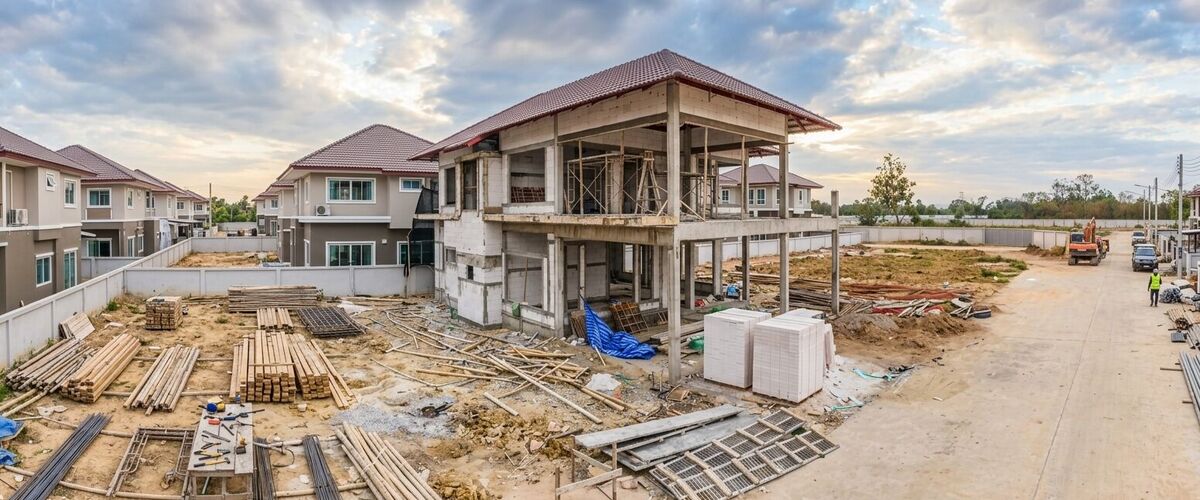
You've found the perfect plot of land. You've got the plans drawn up. You can already picture your dream home taking shape. But there's one question standing between you and breaking ground: how do you actually pay for this?
Building a home is different from buying one. You're not handing over a lump sum for a finished property you're paying for materials, labour, and progress over many months. Traditional home loans aren't designed for that. That's where a building loan comes in.
This guide covers everything you need to know about building loans in South Africa what they are, how they work, what they cost, and how to avoid the common mistakes that derail construction projects.
What Is a Building Loan?
A building loan also called a construction loan is a specialised type of financing designed for people who are building a home from scratch or undertaking major structural renovations. It can be used to finance the construction of a house on vacant land or to finance additions and renovations to an existing home.
Unlike a traditional home loan that gives you a lump sum to buy a completed property, a building loan releases funds in stages as your construction progresses. These are called progress payments or "progressive drawdowns."
During construction, you only pay interest on the amount you've drawn down not the full loan amount. This helps manage cash flow while your home is being built.
How Building Loans Work
The Stage-by-Stage Process
Building loans release funds in stages based on construction milestones. A bank valuer visits the site at each stage to confirm the work before releasing cash. Here's what the typical stages look like:
| Stage | Payment | What's Completed |
|---|---|---|
| Deposit | ~5% | Initial payment to builder to start the project |
| Slab / Foundation | ~15% | Site levelling, foundation laid, plumbing |
| Frame | ~20% | Roof trusses, windows, brickwork |
| Lock-up | ~20% | External walls, insulation, doors |
| Fit-out / Fixing | ~30% | Internal fittings, tiling, cabinetry |
| Completion | ~10% | Painting, appliances, fencing, clean-up |
Before each payment, the bank sends an inspector to the site to verify the work has been completed. Only then is the next portion released, often paid directly to your builder. This system protects you from a contractor who disappears with your money while the work is yet to be completed.
Interest During Construction
During the construction phase, you make interest-only repayments on the amount you've drawn down.
Example: If you have a R1.5 million loan and have only drawn R500,000 halfway through construction, you only pay interest on the R500,000 not the full R1.5 million.
Once construction is complete, the loan typically converts to a standard principal and interest home loan, and your full monthly repayments begin.
Building Loan vs Home Loan — What's the Difference?
| Feature | Building Loan | Home Loan |
|---|---|---|
| Purpose | Build a new home or major renovation | Purchase an existing home |
| Disbursement | Staged payments as construction progresses | Lump sum at purchase |
| Interest | Interest-only during construction | Principal + interest from day one |
| Builder Requirements | Builder must be NHBRC-registered | Not applicable |
| Risk | Higher — construction delays/cost overruns | Lower — completed property |
| Documentation | Building plans, contracts, council approvals | Sale agreement, property transfer |
What Can a Building Loan Cover?
Building loans can be used to pay for:
| Cost | Details |
|---|---|
| Land | Purchasing a plot to build on |
| Construction | Building a house from scratch on vacant land |
| Renovations | Additions and renovations to an existing home |
| Permits and planning | Municipal approvals, architect fees |
| Construction materials | Bricks, cement, timber, fixtures |
| Construction labour | Builders, contractors, specialists |
| External services | Engineers, surveyors, architects |
South African Building Loan Landscape
Who Is Building?
Building loan activity in South Africa is driven largely by higher-income earners. According to Standard Bank data, clients aged 30–50 years, especially those earning more than R50,000 a month, remain the most active in the building loan market. The average value of new building loans has risen compared with two years ago.
Regional trends:
- Gauteng ranks first in building loan registrations
- Western Cape follows closely behind, accounting for 38% of the total value of residential building plans passed by metros and large municipalities
- North West, Limpopo, Eastern Cape, and KwaZulu-Natal have also seen a notable share of building loans over the past three years
An emerging trend is the construction of multiple units on a single stand, which are often rented out but not sectionalised to avoid extra costs.
The Rural Building Reality
An estimated 90% of South Africans have cash-built homes one brick at a time without access to formal credit. This represents about R2 to R3-trillion worth of real estate transforming the rural and township property landscape, built without access to title deeds, payslips or even formal jobs.
For these homeowners, traditional home loans are usually not an option because there is no formal title, which leaves unsecured credit as the only route.
Financing Alternatives
Many South Africans are increasingly using personal loans to finance home construction and renovations. According to Absa's internal personal loan data, home improvement accounts for 23.94% of all loans booked, with a 9.6% year-on-year increase among customers in lower LSM segments.
However, using personal loans often results in higher interest rates, as the credit is not specifically structured for costs related to construction.
The renovation trend:
- 78% of respondents are considering renovations
- 37% say they cannot afford to renovate
- 35% cite the cost of materials as a barrier
Eligibility Requirements
To qualify for a building loan, you'll typically need:
| Requirement | Details |
|---|---|
| Minimum age | At least 18 years old |
| South African resident | Must be a South African resident |
| Credit record | Good credit record required — a score above 661 is considered good |
| Income | Minimum criteria vary by bank — e.g., FNB requires an individual or joint minimum income of R25,000 per month |
| Deposit | Usually 10% of the project cost, though 100% bonds may be possible |
| Approved building plans | Municipal-approved building drawings and a complete site plan |
| Builder | NHBRC-registered builder with contractor all-risk insurance |
| Builder's contract | A signed agreement between you and the builder |
| Detailed quote | Cost quotation and schedule of finishes |
See our full guide on how to qualify for a home loan for more on affordability checks and credit scoring, most of which applies here too.
If you apply to several lenders during a short period of time, it could have a negative impact on your credit score. Multiple enquiries signal to lenders that you're struggling financially or have too much debt.
Documents You'll Need
For all applicants:
| Document | Details |
|---|---|
| South African ID or valid passport | All applicants |
| Provisional drawings and site plan | Drawn up by an architect |
| Approved municipal building plans | Must be signed off |
| Signed building contract | With your chosen contractor |
| Detailed cost quote | Agreed with the builder |
| Cost schedule of finishes | Detailed breakdown |
| Proof of builder's NHBRC registration | Builder must be registered |
| Contractor all-risk insurance policy | Proof of cover |
| Lien waiver from builder | Builder waives rights to property and materials |
For income verification:
| Document | Details |
|---|---|
| 3 months' payslips | For permanently employed applicants |
| 3 months' bank statements | Latest consecutive statements |
| Latest income tax assessment (IT34) | Required by most banks |
Costs to Be Aware Of
Building comes with costs beyond just the construction. Budget for:
| Cost | Estimated Amount |
|---|---|
| Architectural plans | Varies (5–10% of project cost) |
| Municipal approvals | Varies by municipality |
| Land preparation | Clearing, levelling, access |
| Connection fees | Water, electricity, sewage |
| Professional services | Engineers, surveyors, project managers |
| Bond registration fees | R20,000–R50,000 |
| Transfer duty | Tax to SARS (if buying land) see our full transfer duty guide for the current rates |
Always budget extra for unexpected costs. Construction delays, material price increases, and unforeseen site issues are common. Most experts recommend a buffer of 10–15% of your total budget.
Safeguarding Your Project
Builder Registration with NHBRC
It's a requirement that the builder is registered with the National Home Builders Registration Council (NHBRC) to ensure that the work conforms with the council's building guidelines. The NHBRC also provides a warranty fund to safeguard consumers.
The NHBRC has been working to professionalise its building inspectors and expand training programmes. However, quality issues remain the 2024 General Household Survey identified 7.1% of government subsidised houses with weak walls and 7.4% with weak roofs.
Contractor All-Risk Insurance
You must ensure that your builder has contractor all-risk insurance, which covers material damage and third-party injury during construction. It covers natural disasters like fire, lightning, flood and storms too.
If the builder has his own policy, the bank requires a copy of the full policy wording as well as proof of South African Special Risk Insurance Association (SASRIA) cover.
Once construction is complete, you'll need to obtain home insurance.
Common Mistakes to Avoid
1. Not Understanding How Building Loans Work
Many assume a building loan works like a home loan a lump sum paid upfront. It doesn't. The staged payment process can catch you off guard if you're not prepared.
The fix: Understand the progress payment system before you apply. Plan for your living expenses during construction (rent, existing bond payments) while progress payments begin.
2. Underestimating the True Cost of Building
It's easy to focus only on construction costs. But building a home comes with architectural plans, municipal approvals, land preparation, connection fees, and professional services.
The fix: Build in a buffer for unexpected expenses. Don't max out your loan leave room for contingencies.
3. Applying Without Approved Building Plans
South African banks require approved municipal building plans before they'll grant a building loan. If your plans haven't been signed off, your application will be delayed or declined.
The fix: Get your plans approved before you apply. This speeds up the process and shows the bank your project is ready.
4. Choosing the Wrong Builder
Your builder is the most important part of your project. The wrong choice can lead to delays, poor workmanship, or budget overruns.
The fix: Make sure your builder is registered with the NHBRC. Check references and review previous work before making your decision.
5. Not Factoring in Future Affordability
You'll only pay interest on the amount drawn during construction. But once your home is complete, your full building loan repayments kick in.
The fix: Look ahead. Make sure those future repayments fit comfortably within your budget. Banks apply strict affordability checks, so be realistic.
6. Not Having All Your Documents Ready
A building loan requires more documents than a standard home loan: approved plans, signed contracts, cost breakdowns, builder information.
The fix: Get everything in order upfront. Missing or incomplete documents can slow things down significantly.
7. Trying to Manage the Process Alone
A building loan can feel overwhelming, especially if it's your first time building.
The fix: Work with a home loan expert or bond originator. They can help you structure your loan correctly and improve your chances of approval.
Banks Offering Building Loans in South Africa
Several major South African banks offer building loans:
| Bank | Key Notes |
|---|---|
| FNB | Requires individual or joint minimum income of R25,000 per month |
| Nedbank | Minimum single or joint income of R10,000/month; requires approved municipal plans, builder contract, and NHBRC-registered builder |
| Standard Bank | Offers building and renovation loans; Gauteng and Western Cape lead in registrations |
| Absa | Home improvement accounts for 23.94% of all loans booked |
Pre-approval: Before embarking on the project, you should get pre-approved. This will provide you with an idea of what you can afford, and let you know if your credit score is high enough to get the loan approved. See our home loan pre-approval guide for the full process.
Pro Tips from South African Buyers
Based on real-world experiences, here's what experienced builders wish they'd known:
Get Pre-Approved First
A bond originator can help you understand what you can afford before you start. The process takes 24–48 hours for a pre-qualification certificate.
Understand the Inspection Process
The bank makes progress payments to the builder, usually at intervals of 25%, on your instruction. You won't have to deal with the headache of a contractor who disappears with your money while the work is yet to be completed.
Protect Yourself Against Property Damage
Ensure the builder is covered by Contractor All Risk Insurance Cover. This protects the builder, the bank and the borrower from loss or damage.
Consider Adding Multiple Units
An emerging trend is the construction of multiple units on a single stand, which are often rented out but not sectionalised to avoid extra costs. If you're building, consider whether this could work for you.
Be Aware of the Application Rejection Reality
The current rejection rate for home loans in South Africa hovers around 35–40%, which is considerably higher than the average rejection rate observed in other sectors. Ensure you meet all requirements before applying.
- Building loans release funds in stages, not as a lump sum you pay interest only on what you've drawn
- You need approved municipal plans and a NHBRC-registered builder before you can apply
- Gauteng leads in building loan registrations, followed by the Western Cape
- Clients aged 30–50 years, earning R50,000+ per month, are the most active building loan users
- 78% of homeowners are considering renovations, but 37% say they cannot afford them
- An estimated 90% of South Africans have built homes without formal credit about R2–3 trillion in real estate
- Budget 10–15% extra for unexpected costs construction delays and cost overruns are common
- The home loan rejection rate is 35–40% ensure you meet all requirements before applying