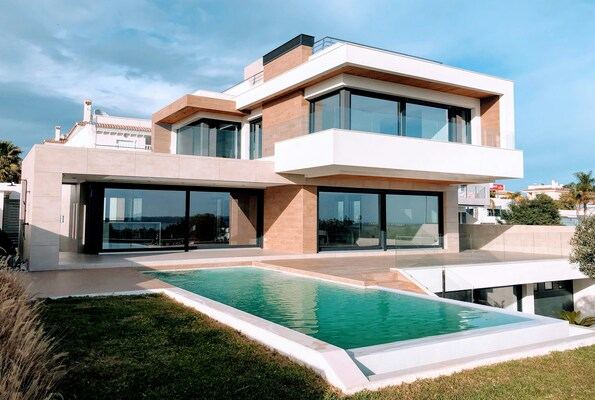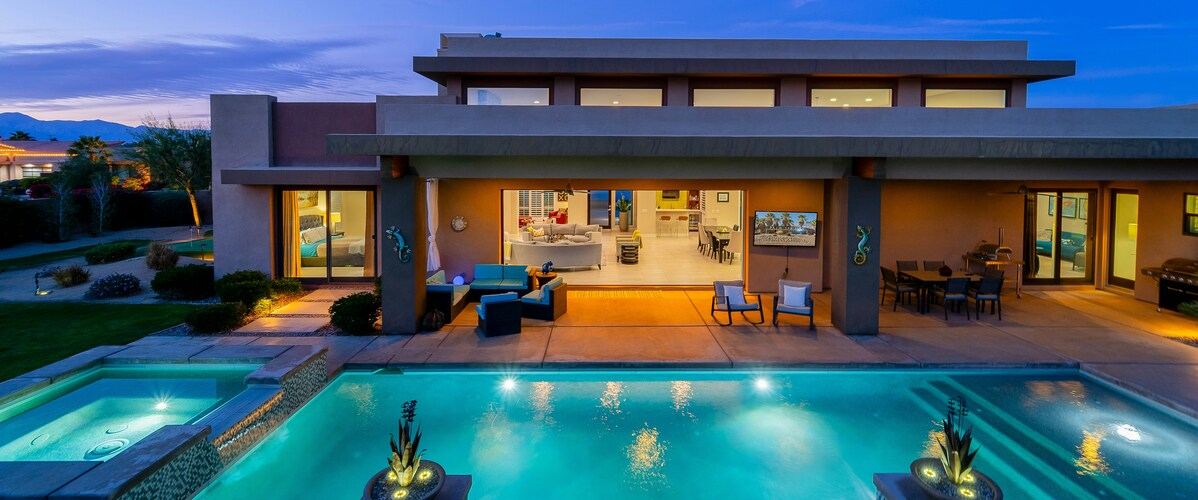
The view from Clifton's Nettleton Road is one of the most expensive in Africa. On a clear day, you can see the Atlantic Ocean stretching to the horizon, the Twelve Apostles framing the coastline, and the sun setting over the water in a blaze of gold and orange.
For the ultra-wealthy, this view comes with a price tag that can exceed R100 million. And they're paying it.
South Africa's luxury real estate market is booming. Foreign buyers are snapping up trophy homes on the Atlantic Seaboard, semigration is reshaping the Western Cape's demographic profile, and a new generation of ultra-luxury estates is redefining what "luxury" means in the South African context.
This guide covers everything you need to know about luxury real estate in South Africa — what it is, where to find it, who's buying it, and what you need to know if you're looking to buy or sell.
What Is Luxury Real Estate in South Africa?
Luxury real estate is a term that gets thrown around loosely. In the South African context, it refers to properties that command premium prices due to their location, size, finishes, and exclusivity.
Price thresholds: According to Lightstone data, the luxury market begins at around R4 million. Foreign buyers account for 15% of transactions between R4 million and R10 million, rising to 26% between R10 million and R20 million, and 39% for properties above R20 million.
Key features of luxury properties:
- Prime location (ocean views, mountain vistas, exclusive suburbs)
- High-quality finishes and materials
- Security and privacy
- Amenities such as pools, gyms, home theatres, and wine cellars
- Land size and landscaping
The South African Luxury Market in 2026
South Africa's luxury property market is experiencing a surge in demand, driven by several factors:
International interest: Foreign buyers now account for 39% of all R20m+ sales, meaning two out of every five luxury homes are bought by international buyers. The Western Cape is the top destination, with foreign ownership at 7.8%, slightly ahead of Gauteng at 7.3%.
Value proposition: Compared to other global destinations, South Africa offers exceptional value. The rand exchange rate gives foreign buyers with pounds, euros, or dollars significantly more buying power. In Cape Town, the median property price is about R3.4 million, while top-end properties sell for R7.2 million on average.
Semigration: The structural shift of wealthy South Africans from Gauteng and KwaZulu-Natal to the Western Cape has been a significant driver of demand. The Western Cape now leads Gauteng in millionaire concentration, with approximately 17,300 high-net-worth individuals compared to Gauteng's 14,000. Cape Town is on track to overtake Johannesburg as Africa's wealthiest city by 2030.
Where Luxury Buyers Are Buying
Atlantic Seaboard — The New Monaco
Cape Town's Atlantic Seaboard has become the epicentre of luxury real estate in South Africa. The area stretches from the V&A Waterfront through Sea Point, Fresnaye, Bantry Bay, Clifton, Bakoven and Camps Bay to Llandudno. It's often compared to Monaco for its spectacular location between mountain and sea, cosmopolitan lifestyle, and limited land space.
Key stats:
- Llandudno: Two out of every three homes sold since 2015 went to foreign buyers at an average value of R29.2 million, totalling approximately R1.96 billion in property acquisitions.
- Bakoven and Camps Bay: Just under 50% foreign-buyer participation with average values of R16 million to R17 million.
- Constantia: 43% foreign-buyer participation at R19.5 million on average.
- Cape Town CBD: 39% foreign-buyer participation across 1,259 transactions.
Recent record sales:
- R170 million for two adjacent vacant stands on Clifton's Nettleton Road
- R92.5 million for a three-level designer home in The Glen, Camps Bay
- R78 million for a modernist mansion in Camps Bay
- R72 million for an apartment in Bantry Bay
Luxury Apartments — The Downsizing Trend
The shift towards luxury downsizing and lock-and-leave lifestyles has seen a surge in high-end apartment sales on the Atlantic Seaboard.
Key stats:
- 329 apartments sold across the Atlantic Seaboard in the first eight months of 2025, totalling R2.4 billion at an average price of R7.2 million — 14.2% higher than the previous year.
- 22 apartments priced above R20 million sold in 2025, compared to 17 the previous year.
- The Waterfront led with eight sales above R20 million, followed by Camps Bay with four.
- Average per-square-metre prices in top Atlantic Seaboard complexes now reach R100,000 to R127,000, with Bantry Bay's The Aurum achieving R180,000 per square metre.
Beyond Cape Town — Emerging Luxury Hotspots
KwaZulu-Natal North Coast: Ballito, Salt Rock, Sheffield Beach, and estates like Simbithi and Zimbali have become significant foreign-buyer markets. Zimbali boasts an average foreign-buyer property value of R8.1 million. Zimbali Lakes recorded R280 million in sales in nine months in 2025.
Garden Route: Knysna, Plettenberg Bay, and the Overstrand area (including Hermanus, Betty's Bay, and Pringle Bay) are attracting foreign buyers.
Limpopo Game Estates: The Hoedspruit, Blyde River Canyon, and Maruleng areas have become magnets for wealthy foreign leisure and lifestyle buyers. Foreign transactions in Limpopo reached 9.1% for properties above R1 million.
Gauteng: Johannesburg's northern suburbs and estates like Steyn City continue to attract wealthy buyers. Steyn City's erven achieved 15-18% annual gains by 2025.
Foreign Buyers and the Luxury Market
The Numbers: Foreign buyers are a significant force in South Africa's luxury property market. Over the past decade:
| Price Band | Foreign Buyer Share |
|---|---|
| Below R1 million | Less than 1 in 30 transactions |
| R4 million – R10 million | 15% |
| R10 million – R20 million | 26% |
| Above R20 million | 39% |
Regional spending: Foreign buyers spent an estimated R153 billion on residential property in Cape Town over the past decade, compared with R107 billion in Johannesburg.
Buyer origins: Most foreign buyers come from Europe, especially Germany, the UK, the Netherlands, Switzerland, and Austria. Increasing interest is also coming from the US.
Why Foreigners Buy in South Africa:
- Value for money: Compared to other global destinations, South African luxury property offers exceptional value. USD 1 million buys significantly more square metres in Cape Town than in New York, London, or Monaco.
- Lifestyle appeal: The outdoor lifestyle, Mediterranean climate, natural beauty, and cosmopolitan culture are major attractions.
- Security and stability: Rising geopolitical tensions elsewhere have made South Africa's relative stability more attractive.
- Semigration and expat return: South African expats earning foreign currency are increasingly investing back into the local housing market.
Legal Requirements for Foreign Buyers: Foreign buyers must comply with South African exchange control regulations. Funds must be transferred through an authorised dealer (a South African bank), and a "deal receipt" must be kept to prove the source of funds. The title deed must be endorsed as "non-resident" to facilitate future repatriation of sale proceeds.
The 50% rule: For most non-resident buyers, South African banks will only lend up to 50% of the purchase price — the rest must come from their own funds introduced from abroad.
For more detailed information on foreign ownership, read our complete guide on buying property in South Africa as a foreigner.
What Luxury Buyers Want
Features That Add Value: According to industry experts, luxury buyers are increasingly looking for:
- Security: Secure, well-managed estates and neighbourhoods are a top priority.
- Low maintenance: Lock-and-go properties that are easy to maintain from overseas.
- Location: Proximity to beaches, restaurants, galleries, medical care, and airports.
- Resilience: Energy autonomy (solar), water security, and reliable infrastructure. Properties with comprehensive solar systems trade at 10-20% premiums.
- Unique design: Trophy homebuyers are increasingly looking for unique architectural and historic significance. "It's less about size and more about the story behind the property."
Turn-offs Luxury Buyers Avoid:
- Generic design: Luxury buyers want distinctive, unique properties, not cookie-cutter homes.
- Poor maintenance: A property that hasn't been well-maintained can significantly reduce its appeal and value.
- Lack of privacy: Overlooked properties or those with inadequate security features are less attractive.
- Compromised views: In a market where views are everything, any obstruction reduces value.
Luxury Investment — Rental Yields and Capital Growth
Rental yields: Luxury rental yields in South Africa are strong, averaging 7-8% nationally due to high-end stock scarcity. In Zimbali on the KwaZulu-Natal North Coast, annual returns can reach 18%.
Capital growth: The luxury segment has significantly outperformed the broader market. Western Cape house price inflation is at 8.5%, compared to the national average of approximately 3.2%. This makes luxury real estate an attractive investment proposition.
Airbnb returns: Cape Town's thriving Airbnb market offers high occupancy and attractive returns. The Atlantic Seaboard and City Bowl remain top choices for short-term rentals.
For a complete breakdown of the tax implications, read our guide on Capital Gains Tax in South Africa.
Buying Luxury Property — What You Need to Know
1. Get Local Expertise: The luxury market operates differently from the mainstream market. Many high-value transactions happen off-market — the 'quiet deal' — where properties are not publicly listed. Work with an agent who specializes in luxury properties and has access to off-market inventory.
2. Understand Your Financing Options: Foreign buyers face the 50% rule — banks will only lend up to 50% of the purchase price unless you live and work in South Africa. Ensure you have the funds in place before making an offer. For more on qualifying for a home loan, read our complete guide.
3. Do Your Due Diligence: Inspect the property thoroughly, including compliance certificates (electrical, gas, water, electric fence), building plans, and title deed checks. Ensure the property's resilience features — solar, battery backup, water security — meet your standards.
4. Consider the Long Term: Luxury real estate is a long-term investment. Understand the costs of maintenance, security, and utilities. For foreign buyers, understand the tax implications of selling and repatriating funds.
Selling Luxury Property — How to Succeed
1. Professional Marketing: Luxury properties require high-quality marketing. Professional photography, video walk-throughs, and virtual tours are essential. Forbes Global Properties, which launched in South Africa in 2026, offers access to an international audience of 167 million digital monthly visitors.
2. Target the Right Buyers: Understand who your buyer is. Is it a foreign investor, a semigrant from Gauteng, or a local buyer looking to upgrade? Tailor your marketing accordingly.
3. Price Realistically: Luxury buyers are sophisticated and well-informed. Overpricing can lead to properties languishing on the market. Work with an agent who understands current market conditions.
4. Address Resilience Features: In the 2026 luxury market, resilience is an asset. Highlight solar systems, battery backup, water security, and security features in your marketing materials.
- Luxury real estate in South Africa begins at around R4 million, with foreign buyers accounting for 39% of R20m+ sales.
- The Atlantic Seaboard is the epicentre of luxury property, with Llandudno seeing two out of every three homes sold to foreign buyers at an average of R29.2 million.
- The Western Cape leads in millionaire concentration, with approximately 17,300 high-net-worth individuals.
- Resilience is the new luxury — energy autonomy, water security, and reliable infrastructure are now non-negotiable for high-end buyers.
- Semigration from Gauteng and KZN to the Western Cape has become a structural feature of the market.
- Foreign buyers spent an estimated R153 billion on residential property in Cape Town over the past decade.
- Luxury downsizing is driving record apartment sales on the Atlantic Seaboard, with prices per square metre reaching R170,000.