You've decided to sell your property. Maybe you're upgrading, downsizing, or relocating. Whatever the reason, you're about to embark on one of the biggest financial transactions of your life.
But here's the thing: selling a house isn't just about sticking a "For Sale" board in the ground and waiting for offers to roll in. Behind every successful property transaction is a foundation of sound preparation and overlooking the details can cost you both time and money.
This guide covers everything you need to know about selling property in South Africa from deciding whether to sell, to pricing your home correctly, navigating the legal requirements, and managing the costs. Let's walk through it step by step.
Part 1: Deciding Whether to Sell
Before you put your property on the market, ask yourself three questions:
| Question | Why It Matters |
|---|---|
| Why are you selling? | Your motivation affects your timeline, flexibility, and negotiation style |
| Is now the right time? | Market conditions, seasons, and personal circumstances all play a role |
| Can you afford to sell? | Selling comes with costs know them before you commit |
Timing matters. In South Africa, spring and summer are prime seasons for home sales gardens look their best, and warmer weather encourages house-hunting. That said, ideal timing depends on market conditions. If there's limited inventory in your area, even listing in winter could yield quick results.
Part 2: Pricing Your Property Correctly
Overpricing is the single biggest mistake sellers make. It's the leading cause of properties not selling.
Buyers have access to a plethora of online property listings and can quickly identify and skip over those appearing to be priced too high for the market. A higher asking price seldom results in a higher offer but could instead drive the listing price down, resulting in an even lower price.
How to Determine the Right Price
| Method | What It Involves |
|---|---|
| Comparative Market Analysis (CMA) | Your estate agent analyses recent sales of similar properties in your area |
| Professional Valuation | R3,500-R5,000 for an objective assessment |
| Online Research | Check Property24 and Private Property for recent sales data |
The Data You Should Know
Properties that sell in the first 30 days achieve 98% of asking price on average. Those on the market for 90+ days sell for only 88-92% of asking price.
A well-priced property typically generates one offer for every 8 to 12 viewings. An overpriced property may need twenty or more viewings to produce a single offer.
Part 3: Choosing an Estate Agent (or Selling Privately)
Private Sale
Advantages:
- Save on commission (typically 5-7.5% + VAT)
- Full control over the process
- Direct interaction with buyers
Disadvantages:
- You handle everything marketing, viewings, negotiations, legal paperwork
- Buyers may not be properly vetted
- Risk of costly legal mistakes
Using an Estate Agent
Choose wisely: A knowledgeable agent brings invaluable expertise from accurate pricing to effective marketing, handling negotiations to ensuring you get the best deal.
Commission: Typically ranges from 5% to 7.5% + VAT, but this is negotiable. If an agent wants a sole mandate, they should be willing to be flexible on commission.
Mandate Types
| Mandate Type | What It Means |
|---|---|
| Sole Mandate | Only one agent may market your property. Often leads to more dedicated service |
| Open Mandate | Multiple agents can list the property. Wider exposure but less focused effort |
Ensure the mandate agreement clearly outlines the commission rate, mandate duration, and whether the agreement is open, sole, or exclusive. Misunderstandings here can lead to costly disputes later.
Part 4: Preparing Your Home for Sale
First Impressions Matter
Kerb appeal: The exterior of your home is the first thing buyers see. Focus on simple, cost-effective improvements that make a big impact spruce up the entrance, add greenery, fix the details.
Interior presentation: Create an environment where buyers can envision themselves living. Pack away personal photos and items, declutter, and neutralise the space. Fresh paint in neutral tones creates a blank canvas for buyers.
Don't Be Present During Viewings
While a seller may be enthusiastic about viewings, it is best not to be present as it tends to make buyers uncomfortable. Trust your agent to act in your best interest they do this for a living and are skilled at dealing with prospective buyers.
Part 5: Compliance Certificates
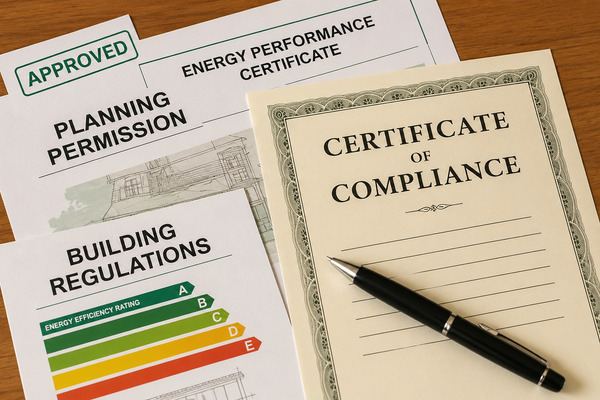
Compliance certificates are a legal requirement for property transfers. It's advisable to have inspections conducted early in the selling process. If issues are found, repairs can be made without delaying the transfer.
| Certificate | Required For | Notes |
|---|---|---|
| Electrical COC | All properties | Must be issued by a certified electrician; valid for 2 years |
| Gas COC | Gas appliances | Must conform to SANS 10087-1 standard |
| Electric Fence COC | Electric fence installations | Must comply with SANS 10222-3 standard |
| Water / Plumbing COC | Properties in Cape Town | Required under the City's Water By-Law |
| Beetle Certificate | Coastal regions | Not legally required but common practice, especially in coastal provinces |
Important: If you're unsure which certificates your property needs, read our full guide on compliance certificates for buying and selling a house in South Africa.
Part 6: The Offer to Purchase (OTP)
The Offer to Purchase is a legally binding contract once signed by both buyer and seller. It outlines:
- Purchase price
- Deposit amount
- Occupation date
- Conditions (e.g., subject to bond approval)
- Who pays for what
Carefully review all terms and conditions. Consult your conveyancer before signing. Never assume terms can be changed later if it's not in writing, it's not enforceable.
Important: Once you sign the OTP, you're legally committed. Read everything carefully and never sign under pressure.
Need a deeper dive? We've put together a complete guide to the offer to purchase for buyers and sellers covering terms, conditions, and what to watch out for before you sign.
Part 7: Bond Cancellation
If you have an existing bond, it must be cancelled before transfer to the new owner. This is a critical step that catches many sellers off guard.
The 90-Day Notice Rule: To avoid early settlement penalty fees from your bank, you must give your bank's Bond Department a full 90 days' notice of your intention to sell. Failing to do this can result in substantial penalty charges over and above the standard bond cancellation fee.
Bond Cancellation Costs
| Cost | Estimated Amount |
|---|---|
| Bond cancellation attorney fee | R5,500+ |
| Early settlement penalty (if less than 90 days' notice) | Varies by bank |
Bond cancellation is handled by a separate attorney appointed by your bank, distinct from the transferring attorney.
Part 8: The Transfer Process
Appointing a Conveyancer: As the seller, you typically have the right to nominate the conveyancing attorney who will manage the transfer process. Choose a conveyancer with a strong track record in residential property transfers.
Municipal Clearance: Municipal clearance certificates are a legal requirement. Your local municipality must confirm that all rates, taxes, and utilities are fully paid up typically for the last 24 months. It's essential to request this early, as municipalities can take several weeks to issue the certificate. Without it, your transfer cannot proceed.
Transfer Timeline: The complete process typically takes 8-16 weeks from listing to transfer completion. For a more detailed breakdown, read our guide on how long property transfer takes.
Part 9: Costs of Selling
Sellers are often caught off guard by the costs that sit quietly beneath the surface. Here's what to budget for:
| Cost | Estimated Amount |
|---|---|
| Estate Agent Commission | 5-7.5% + VAT |
| Bond Cancellation Fees | R5,500+ |
| Compliance Certificates | Varies |
| Rates Clearance (upfront) | 3-4 months of rates |
| Levy Clearance (upfront) | 3-4 months of levies |
| Deed Search Fee | R200+ |
| FICA Verification | R350+ |
For a complete breakdown of all costs, read our guide on the hidden costs of selling a house.
Part 10: Capital Gains Tax
If you're selling a property that is not your primary residence, or if your primary residence sells for a profit exceeding R2 million, Capital Gains Tax (CGT) may apply.
Primary Residence Exclusion: The first R2 million in profit from selling your primary residence is tax-free. For most sellers, this means no CGT is payable.
Investment Properties: If you're selling an investment property or the profit exceeds R2 million, consult a tax practitioner to calculate your CGT obligations. For more detail, read our guide on Capital Gains Tax in South Africa.
Part 11: Common Mistakes to Avoid
1. Overpricing Your Property
The risk: Overpricing is the leading cause of properties not selling. Buyers can quickly identify and skip over properties priced too high for the market.
The fix: Price at or slightly below market value to generate multiple viewings and potentially trigger bidding wars.
2. Dismissing a Quick Offer
The risk: Dismissing a quick offer simply because you think you can get more could risk not getting another offer at all.
The fix: Consider all serious offers. A quick offer usually means the price is at the right level.
3. Getting Too Emotionally Attached
The risk: Every seller believes their property is worth more, especially if they've invested time and money into it. Custom features might not result in a higher price.
The fix: View the sale as a business transaction. Appoint a reputable area agent and trust their advice.
4. Not Managing Expectations
The risk: A seller who expects an offer within a week of listing is setting themselves up for anxiety and panic when week two passes without an offer.
The fix: Understand the realistic timeline. The national average time on market in South Africa is currently over 12 weeks.
5. Ignoring Legal Requirements
The risk: Missing documents title deed, compliance certificates, clearance certificates can bring your sale to a standstill.
The fix: Work through a pre-listing checklist well in advance (see below).
Part 12: Your Pre-Listing Checklist
Before signing a mandate or accepting an offer, work through the following to avoid delays and unwanted surprises:
- Confirm your bond balance and notify your bank's Bond Department (90 days' notice)
- Locate your original title deed and confirm it's error-free
- Confirm approved building plans are available, or budget for redrawing
- Check that your electrical COC is current (less than 2 years old)
- Identify whether gas, electric fence, or borehole COCs will be required
- Budget for 3-4 months of rates and taxes upfront
- Budget for 3-4 months of levies upfront (if applicable)
- Ask your estate agent to provide a net proceeds estimate
- Overpricing is the #1 mistake — properties priced correctly sell faster and for more
- The first 30 days are critical — properties that sell in the first 30 days achieve 98% of asking price
- 90 days' notice is required — failing to notify your bank can result in penalty charges
- Compliance certificates are mandatory — arrange inspections early to avoid transfer delays
- Selling takes 8-16 weeks — from listing to transfer completion
- Agent commission is negotiable — especially if they want a sole mandate
- The first offer is often the best offer — seriously consider all offers
- Budget for hidden costs — rates, levies, certificates, and legal fees add up
Click the button below to download your Selling Property Checklist.
Download Checklist NowWe've also sent a copy to your email.